- Free Consultation 24/7: (813) 727-7159 Tap Here To Call Us


From First DUI to Death Penalty



When Can You Use Force in Self-Defense in Florida? (2026)


Updated October 22, 2026
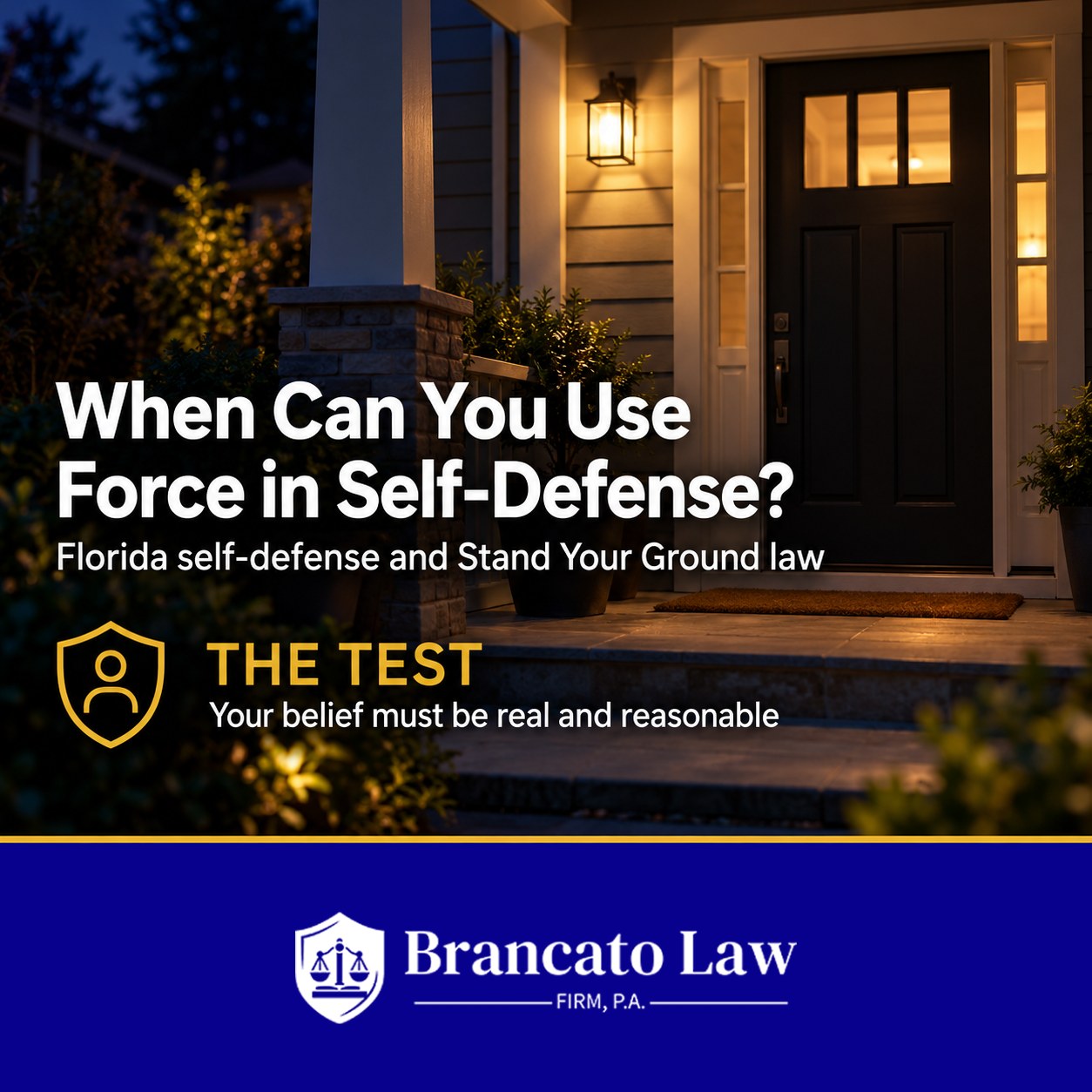
In Florida, you may use or threaten non-deadly force when you reasonably believe it is necessary to defend yourself or another person against someone’s imminent use of unlawful force. You may use or threaten deadly force only when you reasonably believe it is necessary to prevent imminent death, great bodily harm, or the imminent commission of a forcible felony. You have no duty to retreat if you are not engaged in criminal activity and are in a place you have a right to be. Your belief must be both real and reasonable, and the defense is generally unavailable to someone who started the fight or was committing a forcible felony.
As founder of The Brancato Law Firm, P.A., a Tampa criminal defense firm, and a former police academy instructor, I have seen self-defense cases turn on a single question: what did the person reasonably believe in the seconds before they acted? I have tried more than 150 jury trials to verdict, including a second-degree murder case where the jury acquitted on self-defense. Our attorneys defend self-defense cases in Hillsborough, Pinellas, and Pasco Counties, from simple battery to homicide.
This guide explains when Florida law justifies force, the duty to retreat, the home and vehicle presumption, the aggressor rule, the 2025 Florida Supreme Court decision on reasonableness, and the 2026 change on resisting police. A separate guide explains how a Stand Your Ground immunity hearing works. Once a case is filed, our guides on how to claim self-defense in a Florida criminal case and Stand Your Ground vs. self-defense cover the next steps.
When can you use non-deadly force in Florida?
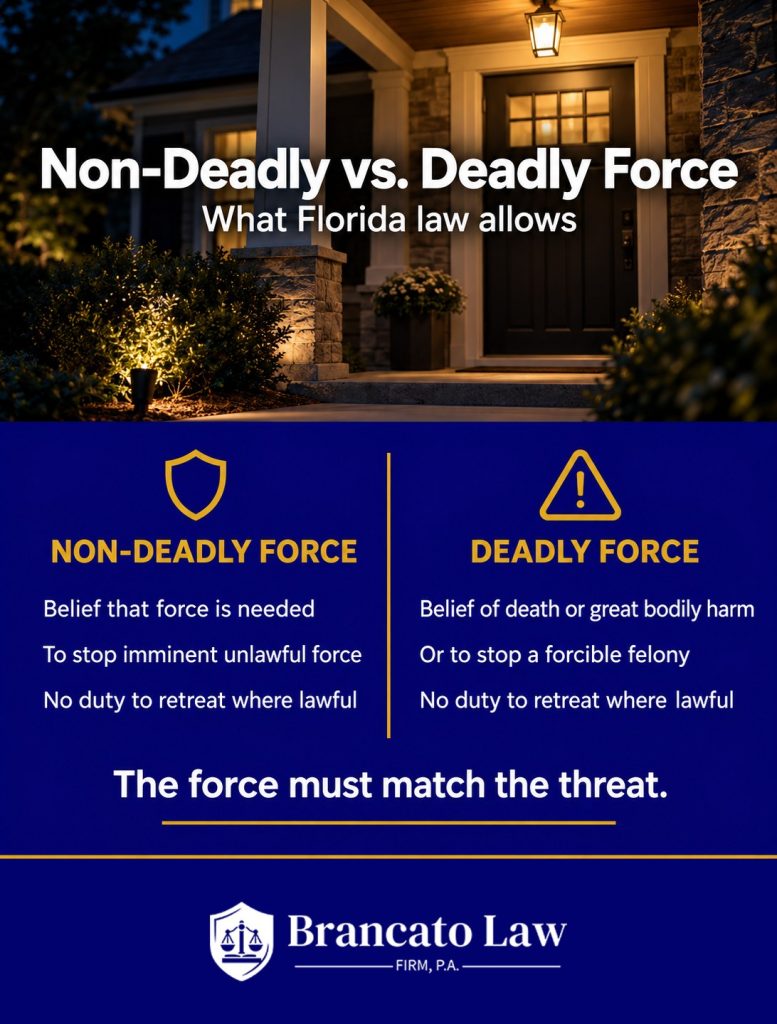
You can use or threaten non-deadly force when you reasonably believe it is necessary to protect yourself or someone else from imminent unlawful force. Section 776.012(1), Florida Statutes provides that “A person is justified in using or threatening to use force, except deadly force, against another when and to the extent that the person reasonably believes that such conduct is necessary to defend himself or herself or another against the other’s imminent use of unlawful force.” The same subsection says the person “does not have a duty to retreat.”
Non-deadly force covers a push, a punch, or holding someone back. The force must match the threat: “to the extent” necessary. Our attorneys at The Brancato Law Firm build these cases on video, injuries, and witness accounts that show what the other person did first.
When is deadly force justified in Florida?
Deadly force is justified only to prevent imminent death or great bodily harm, or the imminent commission of a forcible felony. Under section 776.012(2), a person may use or threaten deadly force “if he or she reasonably believes that using or threatening to use such force is necessary to prevent imminent death or great bodily harm to himself or herself or another or to prevent the imminent commission of a forcible felony.”
Section 776.08, Florida Statutes defines “forcible felony” to include murder, manslaughter, sexual battery, carjacking, home-invasion robbery, robbery, burglary, arson, kidnapping, aggravated assault, aggravated battery, aggravated stalking, and “any other felony which involves the use or threat of physical force or violence against any individual.”
| Non-deadly force | Deadly force | |
|---|---|---|
| Statute | § 776.012(1) | § 776.012(2) |
| Justified to stop | Imminent use of unlawful force | Imminent death, great bodily harm, or a forcible felony |
| Threats covered | Yes, threatening non-deadly force | Yes, threatening deadly force |
| Duty to retreat | None | None, if not engaged in criminal activity and in a place you have a right to be |
| Typical example | Pushing away someone who is swinging at you | Using a weapon against an armed attacker |
Do you have a duty to retreat in Florida?
No, in most situations. Florida removed the duty to retreat in 2005. The law that did it, chapter 2005-27, Laws of Florida, stated that no person “should be required to surrender his or her personal safety to a criminal” or “needlessly retreat in the face of intrusion or attack.”
For deadly force, the no-retreat rule has two conditions. Section 776.012(2) gives the right to stand your ground “if the person using or threatening to use the deadly force is not engaged in a criminal activity and is in a place where he or she has a right to be.” When the evidence shows criminal activity or that the person had no right to be there, Florida’s standard jury instruction tells the jury deadly force was not justified unless the person used every reasonable means to avoid the danger, unless retreat would have increased the danger. Our attorneys at The Brancato Law Firm look closely at any “criminal activity” the State claims, because that one fact can change the jury instruction.
Does threatening force count as self-defense in Florida?
Yes. Since the 2014 “warning shot” law, chapter 2014-195, Laws of Florida, the self-defense statutes cover “using or threatening to use” force. That change matters most in aggravated assault cases, where the person displayed a weapon but never used it.
Florida’s appellate courts have not treated every display of a gun the same way. In Marty v. State, 210 So. 3d 121 (Fla. 2d DCA 2016), a Polk County case, the Second District held that pointing a gun without firing “did not, as a matter of established law, constitute deadly force,” and found trial counsel ineffective for requesting only the deadly-force instruction. In Little v. State, 302 So. 3d 396 (Fla. 4th DCA 2020), the Fourth District held that after the 2014 amendment, pointing a loaded gun and issuing a command is generally a threat of deadly force. Firing a gun, even as a warning, is treated as deadly force. Which instruction the jury hears can decide the case, and our attorneys argue for the correct one in every trial.
What does Florida’s home and vehicle presumption cover?
Florida presumes you feared death or great bodily harm when someone was unlawfully and forcibly entering, or had entered, your home or occupied vehicle. Under section 776.013, Florida Statutes, the presumption applies when the other person “was in the process of unlawfully and forcefully entering, or had unlawfully and forcibly entered, a dwelling, residence, or occupied vehicle,” or was removing someone against their will, and the defender “knew or had reason to believe” it was happening. “Dwelling” includes “any attached porch” and “a tent,” and “vehicle” means “a conveyance of any kind, whether or not motorized.”
The presumption does not apply in four situations:
| Exception under § 776.013(3) | Why it matters |
|---|---|
| The other person had a right to be in the home or vehicle, such as an owner, tenant, or resident, unless a domestic violence injunction or written no-contact order applied | Most domestic disputes between people who live together fall outside the presumption |
| The person being removed was the other person’s child or grandchild, or in that person’s lawful custody | Custody disputes are not covered |
| The defender was engaged in criminal activity or using the home or vehicle to further it | Criminal activity removes the presumption |
| The other person was a law enforcement officer who identified himself or whom the defender knew or should have known was an officer | The presumption never applies against a known officer |
When the presumption does not apply, the general rules of section 776.012 still do. Our attorneys at The Brancato Law Firm use the presumption where it fits and argue reasonableness where it does not.
Can you use force to protect property in Florida?
Yes, but deadly force only to stop a forcible felony. Under section 776.031, Florida Statutes, a person may use or threaten non-deadly force “to prevent or terminate the other’s trespass on, or other tortious or criminal interference with, either real property other than a dwelling or personal property” that the person lawfully possesses. Deadly force is justified “only if he or she reasonably believes that such conduct is necessary to prevent the imminent commission of a forcible felony.” Shooting someone over a stolen bike, without a forcible felony in progress, is not justified.
When is self-defense not available in Florida?
Self-defense is generally not available to the aggressor. Section 776.041, Florida Statutes bars the defense for a person who “Is attempting to commit, committing, or escaping after the commission of, a forcible felony,” or who “Initially provokes the use or threatened use of force.” The initial provoker regains the defense only if the force against him becomes so great that he reasonably believes he faces imminent death or great bodily harm and has exhausted every reasonable means of escape, or if he withdraws in good faith, clearly communicates it, and the other person keeps coming.
The forcible-felony part of that statute is often misused at trial. In Martinez v. State, 981 So. 2d 449 (Fla. 2008), the Florida Supreme Court held that “it is error for a trial court to read the forcible-felony instruction to the jury where the defendant is not charged with an independent forcible felony,” though the error is fundamental only when it deprives the defendant of a fair trial. The Second District applied that rule this year in Cordell v. State, No. 2D2024-1370 (Fla. 2d DCA June 19, 2026), a Hillsborough County case. Because Cordell was not charged with any forcible felony other than the ones he claimed self-defense for, the instruction “potentially vitiated his defense,” and the court reversed his convictions. The same opinion rejected his challenge to the initial-aggressor instruction because his lawyer did not object again when it was read. Our attorneys object on the record every time.
The initial-aggressor instruction itself is valid. In State v. Floyd, 186 So. 3d 1013 (Fla. 2016), the Florida Supreme Court held that the standard instruction “accurately and correctly explains this law.”
Does your fear have to be reasonable?
Yes, and it has to be real. In Oquendo v. State, 420 So. 3d 466 (Fla. 2025), a Pinellas County case, the Florida Supreme Court held that Florida’s self-defense standard has “both a subjective and objective component”: the person must actually believe force is necessary, and that belief must be reasonable. The Court held that evidence of post-traumatic stress disorder “can be relevant to the subjective component, even though it is irrelevant to the objective component.” It still affirmed the conviction, because the defendant testified the shot was an accident.
Florida does not reduce a charge for an honest but unreasonable belief. In Hill v. State, 979 So. 2d 1134 (Fla. 3d DCA 2008), the Third District rejected an “imperfect self-defense” instruction, holding that “The Florida statute does not contain a provision on imperfect self-defense.” The jury instruction itself says “The danger need not have been actual,” but the appearance of danger must have been “so real that a reasonably cautious and prudent person under the same circumstances would have believed” force was necessary. Our attorneys build both parts: what our client believed, and why a reasonable person would have believed it too.
Can you use force against a police officer in Florida?
Almost never. Section 776.051, Florida Statutes was rewritten effective June 16, 2026 by the Officer Jason Raynor Act, chapter 2026-144, Laws of Florida. It now provides that a person is not justified in using or threatening force to resist “any arrest or detention” by an officer, or an officer performing official duties, “if the law enforcement officer was acting in good faith.” “Acting in good faith” means “sincere and reasonable efforts to comply with legal requirements, even if the arrest, detention, or other act is later found to have been unlawful.” The earlier version applied only to arrests. The safe course is to comply, stay silent, and challenge the arrest later in court.
What is Stand Your Ground immunity?
It is protection from prosecution, not just a defense at trial. Under section 776.032, Florida Statutes, a person who uses or threatens force as permitted by sections 776.012, 776.013, or 776.031 “is immune from criminal prosecution and civil action,” and police “may not arrest the person for using or threatening to use force unless it determines that there is probable cause that the force that was used or threatened was unlawful.” At a pretrial hearing, once the defense raises a prima facie claim, the State must overcome it by clear and convincing evidence. Our guide on how a Stand Your Ground hearing works explains the hearing step by step, and our Tampa violent crime lawyer team handles these motions.
How often do self-defense cases come up in Florida?
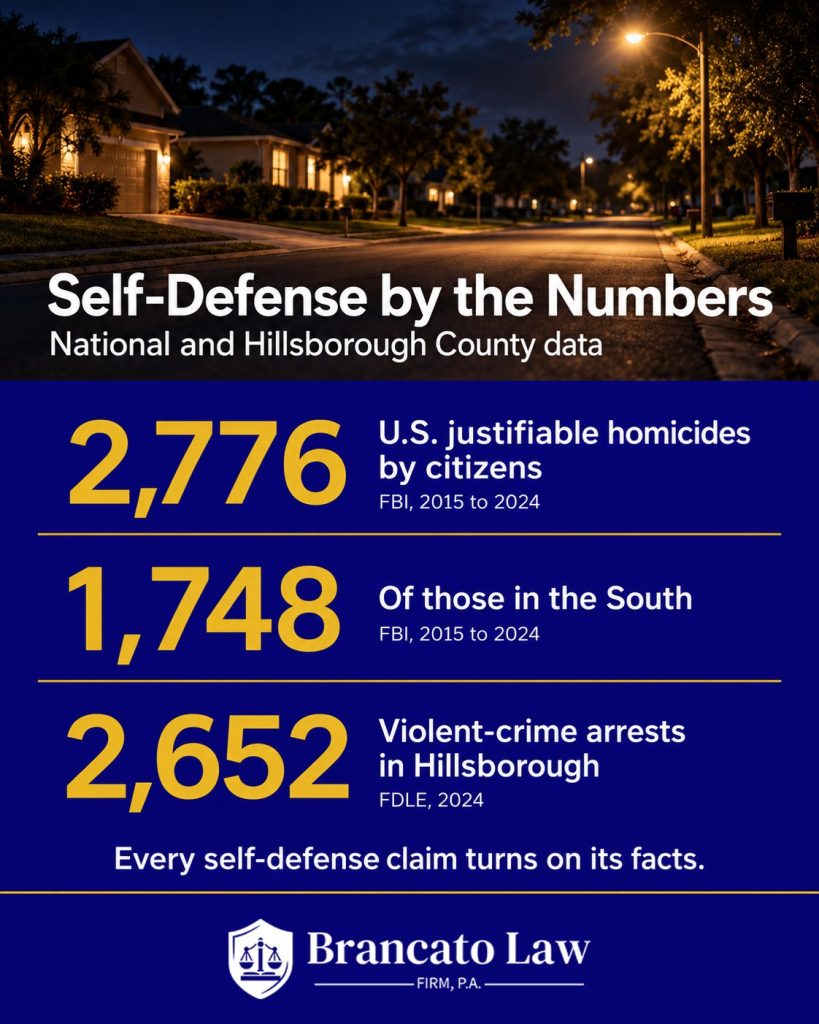
Regularly. The FBI’s Justifiable Homicide, 2015 to 2024 report counted 2,776 justifiable homicides by private citizens nationally over that decade, 1,748 of them (63.0%) in the South. The FBI does not publish a Florida breakout. Most self-defense claims involve lesser charges: FDLE arrest data published by Florida Health CHARTS show 2,652 violent-crime arrests in Hillsborough County in 2024.
Researchers have studied how Florida’s law is applied. A peer-reviewed study in Social Science & Medicine, Race, law, and health: Examination of “Stand Your Ground” and defendant convictions in Florida (Ackermann and colleagues, 2015), analyzed 204 Florida Stand Your Ground cases from 2005 to 2013 and found, after controls, an odds ratio of 2.1 for conviction when the victim was white compared with non-white victims. A study in JAMA Internal Medicine by Humphreys, Gasparrini, and Wiebe, Evaluating the Impact of Florida’s “Stand Your Ground” Self-defense Law on Homicide and Suicide by Firearm (2017), reported a 24.4% increase in homicides after the 2005 law took effect.
Real results in self-defense cases
| Charge | Result |
|---|---|
| Second-degree murder, roommate shooting | Not guilty; the jury acquitted on self-defense |
| Aggravated assault with a deadly weapon (October 2026) | A veteran facing five years in prison; a Stand Your Ground motion and the firm’s mitigation report led to Pretrial Intervention, with the charge to be dismissed |
| Second-degree murder | The client killed a man in self-defense while committing a crime; the jury rejected murder and returned manslaughter, and he received a term of years instead of life |
Past results do not guarantee future outcomes. More results are on our case results page.
What should you do after using force in self-defense?
Call 911, get medical help for anyone hurt, and then say as little as possible. Tell officers you were attacked, that you will cooperate, and that you want a lawyer before giving a statement. Statements made in the first hour often become the State’s main evidence. Preserve your own injuries in photos, save texts and video, and list witnesses. Police may decide whether to arrest based on what they learn that night, so representation before charges are filed can matter as much as anything that happens in court.
Frequently asked questions about Florida self-defense law
Can self-defense charges be dropped in Florida?
Yes. Charges can be dropped when the evidence shows the force was justified, and a judge must dismiss the case if the State cannot overcome a Stand Your Ground immunity claim by clear and convincing evidence. The Brancato Law Firm presents video, injuries, and witness statements to the prosecutor before the filing decision when we can.
Is pointing a gun self-defense in Florida?
It can be. Florida’s statutes cover threatening force, so displaying a gun can be justified on the same terms as using force, but courts disagree on whether pointing a gun is judged as deadly or non-deadly force. Our attorneys at The Brancato Law Firm argue for the instruction that fits the facts, and our Tampa gun crimes lawyer page explains how those charges are defended.
Does Stand Your Ground apply inside my home?
Yes, and the home has extra protection. Section 776.013 presumes reasonable fear when an intruder unlawfully and forcibly enters, but the presumption does not apply against someone with a right to be there, such as a spouse or roommate. The Brancato Law Firm sorts out which rule applies before deciding how to raise the defense.
Can I use deadly force to protect my property in Florida?
Only to prevent the imminent commission of a forcible felony, such as a robbery or burglary. Section 776.031 allows non-deadly force to stop a trespass or theft, and our attorneys at The Brancato Law Firm explain where that line falls in each case.
What if I started the argument but the other person escalated?
You may still claim self-defense in limited situations. Under section 776.041, an initial provoker regains the defense if the other person’s force becomes deadly and there is no reasonable way to escape, or if the provoker clearly withdraws and the other person keeps attacking. The Brancato Law Firm builds these cases on the timeline shown in the video, and you can learn more on our Tampa violent crimes defense page.
Can police arrest me if I acted in self-defense?
They can arrest only if they have probable cause that the force was unlawful, under section 776.032(2). In practice, officers often arrest and leave the question for the courts, and our attorneys at The Brancato Law Firm raise immunity at the earliest point the facts allow.
Talk to our Tampa self-defense attorneys today
Self-defense cases are won or lost on what is said and preserved in the first days. The Brancato Law Firm, P.A., founded by Tampa Criminal Defense Attorney Rocky Brancato, will protect your statements, gather the video and witnesses, and decide whether to seek immunity before trial. Call (813) 727-7159 for a free, confidential consultation. You can call us at any hour. Our firm has Spanish-speaking staff, and attorney Jean-Luc Adrien speaks Spanish, Haitian Creole, and French. Read about our Spanish and Haitian Creole criminal defense services.
For more about our defense strategies, visit our Violent Crimes page.
The Brancato Law Firm, P.A.
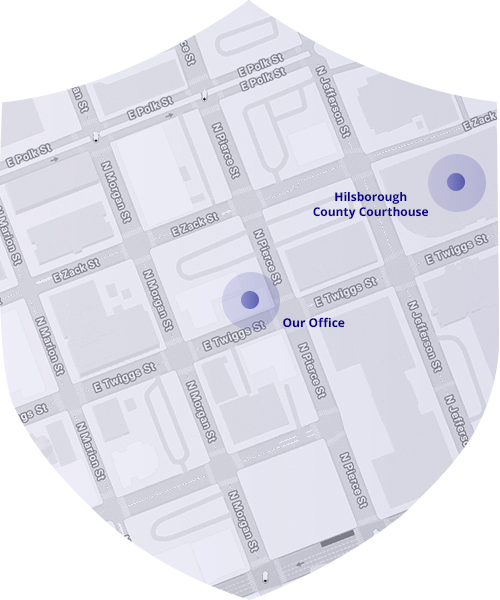
620 E. Twiggs Street, Suite 205, Tampa, FL 33602
(813) 727-7159
Serving Hillsborough, Pinellas, and Pasco Counties
The Brancato Law Firm, P.A. is a Tampa-based criminal defense practice. We are not affiliated with any other Brancato-named law firms.
Visit Us
Tampa, FL 33602
Contact Us Now
Free Legal Consultation (813) 727-7159