- Free Consultation 24/7: (813) 727-7159 Tap Here To Call Us


From First DUI to Death Penalty


Should Your Defense Attorney Visit the Crime Scene and Inspect the Evidence? (2026)


Rewrite/update date: November 4, 2026. Originally published in January 2026.
Yes. A defense attorney should visit the crime scene and inspect the physical evidence in any case that will go to trial, because police reports leave out what the officers never looked for. A site visit can turn up surveillance cameras, blocked sightlines, poor lighting, and distances that contradict a witness. An evidence room inspection can show how items were packaged and stored, including storage errors that make a lab result unreliable. Florida’s discovery rule lets the defense inspect, test, and photograph the State’s tangible evidence, and the earlier the work starts, the more evidence survives.
Most trials are decided by facts the jury can picture, and police reports rarely give the jury the full picture. I learned that in the Major Crimes Unit and in more than 150 jury trials to verdict. As founder of The Brancato Law Firm, P.A., a Tampa criminal defense firm, I still walk the scene myself before trial and go to the evidence room when physical evidence decides the case. Our attorneys pair that work with a network of forensic experts who can explain to a jury what the State’s investigation missed.
Why should a defense attorney visit the crime scene?
A defense attorney should visit the crime scene because the scene holds evidence that no report describes. Police need only probable cause to arrest, and once they have it, many officers move on to the next call. The State still has to prove guilt beyond a reasonable doubt at trial, and the gap between those two standards is where an independent investigation pays off.
| Standard | When it applies | What it requires |
|---|---|---|
| Probable cause | Arrest | Reasonable grounds to believe a crime occurred and the person committed it |
| Beyond a reasonable doubt | Trial and conviction | Proof that leaves the jury with no reasonable doubt about guilt |
| Preponderance of the evidence | Civil cases, for comparison | More likely than not |
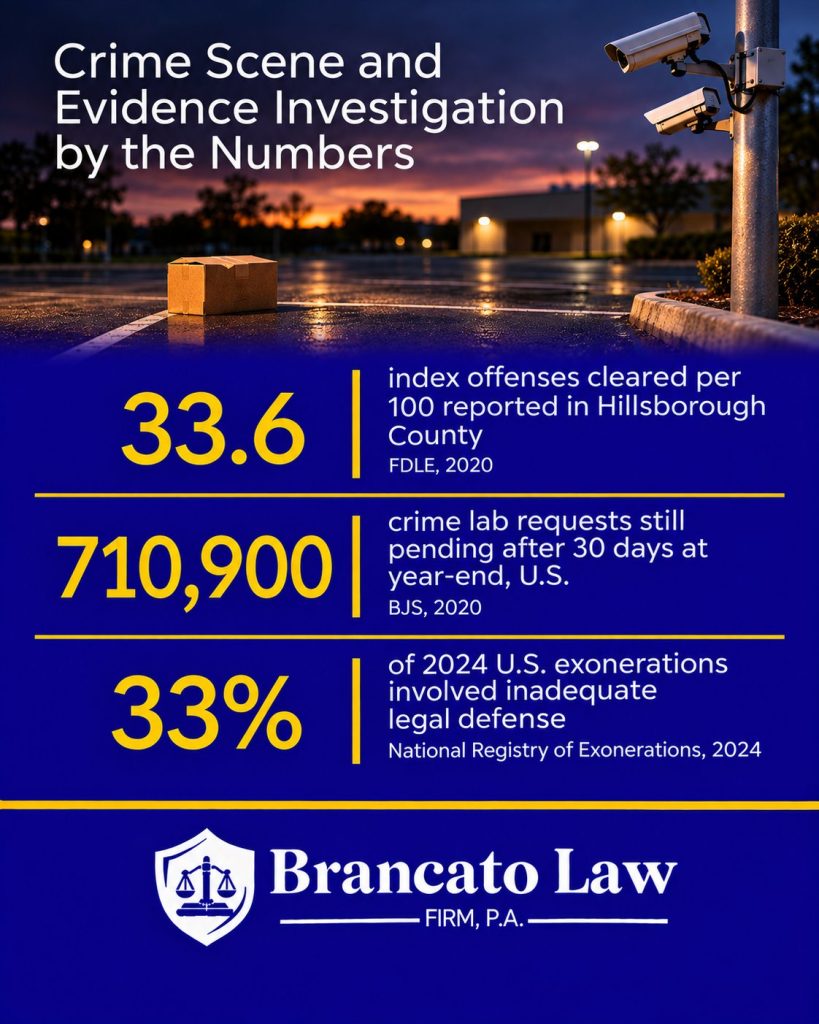
Police also clear fewer cases than most people assume. In 2020, law enforcement agencies in Hillsborough County cleared 33.6 index offenses for every 100 reported, according to the Florida Department of Law Enforcement’s County and Municipal Offense Report for 2020. Investigators working that volume often stop gathering evidence once an arrest is made, which is why our firm treats the arrest report as the starting point for its own investigation.
What can a crime scene visit uncover?
A crime scene visit can uncover cameras, witnesses, and physical facts that test every part of the State’s story. The visit lets the attorney compare the police report against the real layout: whether a witness could see what she described, whether the timeline fits the distances, and whether lighting allowed an identification.
| Evidence type | Where to find it | How it helps the defense |
|---|---|---|
| Surveillance video | Businesses, parking lots, ATMs, traffic and doorbell cameras | Shows what happened, or proves police never collected it |
| Witness vantage points | Sightlines, distances, obstructions | Tests whether a witness could see what he or she claims |
| Lighting conditions | Time of day, street lights, shadows | Challenges identification testimony |
| Physical layout | Distances, barriers, exits | Tests the State’s timeline |
| Environment | Noise, traffic, weather | Explains how an honest witness could be mistaken |
Before the visit, our attorneys often study the location on Google Street View to spot likely camera positions. Street View images can be years old, so they are a starting point. Nothing replaces standing where the witness stood.
How do our attorneys conduct a crime scene visit?
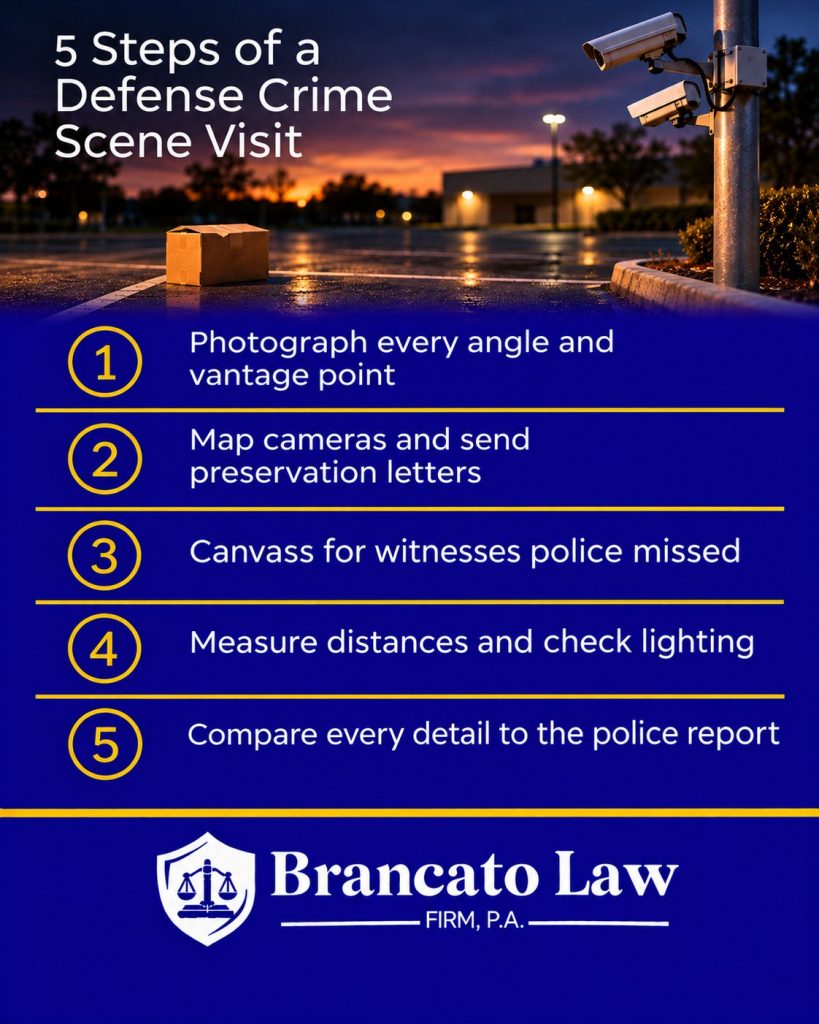
Our attorneys work through every scene with the same five steps, so nothing depends on memory at trial:
- Photograph the location from every angle, including the witnesses’ claimed vantage points.
- Map every camera, and send preservation letters to the owners of any that might hold footage.
- Canvass nearby businesses and homes for witnesses police never interviewed.
- Measure distances and note lighting at the time of day the incident happened.
- Compare each detail against the police report and the depositions, and mark every conflict for cross-examination.
When a case may turn on disputed facts, our firm can send an investigator early to document the scene and find cameras before footage is overwritten. When the case heads to trial, I go personally. Knowing the distances and sightlines firsthand makes cross-examination precise, and an officer who knows the defense attorney has walked the scene cannot comfortably exaggerate a distance or misremember a layout.
How long is surveillance video kept?
Surveillance video is often kept for only days or weeks before the system records over it, and some systems keep far less. In State v. Hampton, 113 So. 3d 109 (Fla. 5th DCA 2013), a deputy went back to the store where the defendant was arrested to get the video and was told any tape would have been erased within 24 hours. The appeals court reversed the dismissal of the charge because the defense had not proven the State acted in bad faith.
That case shows why waiting is dangerous. Once footage is gone, it cannot be recovered, and a court will not dismiss the case just because police failed to collect it. If you know about cameras where the incident happened, tell your attorney the day you hire the firm. When a person is under investigation and not yet charged, our attorneys send preservation letters as part of our representation before charges are filed.
Case study: the community pool battery trial
A crime scene visit won a battery trial for our firm even though the video itself was long gone. I took over the case from another attorney. The State’s case looked strong on paper: an alleged victim said my client hit him during an argument in a community pool parking lot, and a woman who watched from a distance said she saw my client swinging his arms before the man fell.
My client admitted the argument and admitted raising his voice and gesturing. He insisted he never touched the man. With his permission, I told the jury that my client, who is Hispanic, talks with his hands when he is upset, and that the eyewitness mistook passionate gesturing for punches. Standing alone, that defense asked the jury to believe my client over two witnesses.
What the scene showed
Before trial, I drove to the pool and walked the parking lot. I photographed cameras mounted on poles and building corners with a clear view of where the incident happened. The footage had been recorded over long before I took the case. Neither the police nor the previous attorney had asked for it.
The cross-examination
The cameras became the center of the officer’s cross-examination. I walked him through his duty to collect evidence, the difference between probable cause and proof beyond a reasonable doubt, and the value of video in a he-said, she-said case. He could not recall cameras at the pool. I showed him Defense Exhibit One, my photographs of the parking lot, and he agreed the cameras were there and that no one had collected the video.
Case result: battery, not guilty. The State’s case rested on an alleged victim and an eyewitness. A defense visit to the scene revealed surveillance cameras that police never checked, and cross-examination showed the jury that the investigation skipped the one source of objective evidence. The jury returned a verdict of not guilty. Past results do not guarantee future outcomes.
Why should a defense attorney inspect the physical evidence?
A defense attorney should inspect the physical evidence because lab reports describe test results, not how the evidence was handled before testing. Florida’s discovery rule, Florida Rule of Criminal Procedure 3.220, requires the prosecutor to let the defense inspect, copy, test, and photograph the tangible evidence in the case. Many attorneys never use that right and see the evidence for the first time in front of the jury.
| What paper discovery shows | What a physical inspection reveals |
|---|---|
| Lab results and conclusions | How the samples were stored before testing |
| Chain of custody signatures | The actual containers and storage conditions |
| Evidence collection reports | Whether items were packed together |
| Photographs of evidence | Current condition and any degradation |
| Inventory lists | Packaging integrity and contamination risks |
The backlog at crime labs is one reason handling matters. In 2020, publicly funded forensic crime laboratories in the United States received 3.3 million requests for service and ended the year with about 710,900 requests not completed within 30 days, according to the Bureau of Justice Statistics report Publicly Funded Forensic Crime Laboratories, 2020. Evidence that waits months for testing sits in a property room the whole time, and how it sits there can matter as much as the test.
What does our firm look for in the evidence room?
Our attorneys look for anything that undermines the reliability of the State’s evidence: storage conditions, packaging, and signs of handling. I schedule the inspection close enough to trial that the details are fresh for cross-examination, but early enough to file motions and retain experts if we find a problem. I bring an investigator with a camera, and in a capital case my trial partner comes too, because two sets of eyes matter when a life is at stake. The lead detective or the evidence custodian is usually present.
| Evidence type | What we inspect | Potential issues |
|---|---|---|
| Biological evidence (DNA, blood) | Storage temperature, container integrity | Degradation, cross-contamination |
| Clothing and fabric | Packaging, contact with other items | Transfer contamination |
| Weapons | Condition, handling marks | Misidentification, tampering |
| Digital devices | Storage conditions, access logs | Altered or lost data |
| Drug evidence | Weight records, packaging seals | Loss, substitution, contamination |
Case study: the cold hit DNA capital case
An evidence room inspection took the death penalty off the table in a capital case our firm defended. The State sought death based on a DNA “cold hit” in a homicide more than 20 years old. Investigators had collected a cigarette butt at the scene, and when its DNA was run through CODIS, the national DNA database, it matched my client, who was already on death row for a separate homicide.
Modern DNA testing can amplify a usable profile from a tiny sample, such as saliva on a cigarette, and that is why decades-old cases now produce cold hits. On paper, the case looked airtight. My trial partner, our investigator, and I spent a full day in the police evidence room, photographing every container and recording which items shared packaging.
We found that the cigarette butt, the only evidence tying my client to the crime, had been stored in the same box as the victim’s rape kit for more than 20 years. Two items of biological evidence sitting together for two decades created a real risk that DNA moved from one to the other.
The Daubert challenge
I filed a Daubert motion challenging the reliability of the DNA evidence. Under section 90.702, Florida Statutes, expert testimony is admissible only if it is based on sufficient facts or data, is the product of reliable principles and methods, and applies those methods reliably to the facts of the case. The Florida Supreme Court adopted that standard as a rule of evidence in In re Amendments to the Florida Evidence Code, 278 So. 3d 551 (Fla. 2019), replacing the older Frye test.
Case result: capital murder, death penalty withdrawn. The State sought death based on a DNA cold hit from a cigarette butt. A full-day evidence room inspection found the cigarette butt stored in the same container as the victim’s rape kit for more than 20 years, and the defense challenged the DNA evidence with a Daubert motion. The prosecution withdrew the death penalty. Past results do not guarantee future outcomes.
What happens when police fail to collect or preserve evidence?
When police fail to collect or preserve evidence, the charge usually goes forward, but the defense can put that failure in front of the jury. In Arizona v. Youngblood, 488 U.S. 51 (1988), police failed to refrigerate clothing and test semen samples in a child sexual assault case. The U.S. Supreme Court held that losing evidence that is only potentially useful does not violate due process unless the defendant shows police bad faith. The Court added that a defendant “is free to argue to the finder of fact” that a test police never performed might have cleared him.
Florida follows that rule. In Patterson v. State, 199 So. 3d 253 (Fla. 2016), an arson defendant’s burned truck was destroyed before his arrest, and the Florida Supreme Court held that Youngblood‘s bad faith requirement applies whether the defense asks for dismissal or only for exclusion of evidence. Legal relief for lost evidence is hard to win. What our attorneys can do in nearly every case is show the jury, through cross-examination and expert testimony, what the investigation failed to collect. Our case study on what happens when police destroy evidence shows that approach in a murder trial.
Is it ineffective assistance if a lawyer never investigates?
It can be. Under Strickland v. Washington, 466 U.S. 668 (1984), a convicted defendant claiming ineffective assistance must show that the lawyer’s performance was deficient and that there is a reasonable probability the result would have been different without the error. The Supreme Court said counsel “has a duty to make reasonable investigations or to make a reasonable decision that makes particular investigations unnecessary.”
A failure to visit a scene or inspect evidence supports a claim only when it changed the outcome, such as footage that would have cleared the client or a storage problem that would have kept out a lab result. Inadequate defense work shows up in national data. Of the 147 exonerations recorded nationwide in 2024, 48, or 33%, involved inadequate legal defense, and 38, or 26%, involved mistaken witness identification, according to the National Registry of Exonerations 2024 Annual Report.
Why does investigation timing matter?
Timing matters because evidence disappears on its own schedule, not the court’s. Video is recorded over, witnesses move, lighting and landscaping change, and property rooms purge items under retention policies. Biological samples degrade over time. The defense that starts investigating at arrest has more to work with than the defense that starts at the trial date.
Our attorneys start with the evidence most likely to vanish: cameras first, then witnesses, then the scene itself, and then a request to inspect the physical evidence once discovery is under way. For cases built on DNA, prints, or other lab work, our forensic science defense attorney page explains how we retain experts to review the State’s testing. Our post on why expert witnesses matter in major crimes cases covers when to bring one in.
Frequently asked questions
Why don’t police always collect surveillance video?
Police often stop collecting evidence once they have probable cause for an arrest, and some officers never check for cameras at locations without obvious security systems. Our attorneys at The Brancato Law Firm canvass for cameras ourselves and send preservation letters the day we are hired.
Can I visit the crime scene myself?
You can visit a public place, but it is usually better to let your attorney or a professional investigator do it. The Brancato Law Firm documents scenes so the photographs can be authenticated at trial under section 90.901, Florida Statutes, and so you avoid any contact with witnesses.
What is an evidence view in a Florida criminal case?
An evidence view is a scheduled inspection of the physical evidence at the law enforcement property room, where the defense examines each item and photographs how it was packaged and stored. Attorneys at The Brancato Law Firm request evidence views in cases where DNA, weapons, drugs, or other physical items will decide the verdict.
How long does an evidence inspection take?
A simple case can take a few hours, and a capital or multi-scene case can take a full day or longer. The Brancato Law Firm plans the inspection with enough time left before trial to file motions and retain experts if we find a problem.
What is a Daubert motion?
A Daubert motion asks the judge to exclude expert testimony that does not meet the reliability requirements of section 90.702, Florida Statutes. Our attorneys at The Brancato Law Firm use Daubert motions to challenge lab results when storage, handling, or testing methods make them unreliable, as described on our Tampa forensic evidence attorney page.
Which cases benefit most from a scene visit or evidence inspection?
Any case that depends on what happened at a place or on a physical item benefits: battery, domestic violence, robbery, homicide, DUI crashes, eyewitness identification cases, and DNA cases. The Brancato Law Firm decides early which investigation each case needs, and our DNA evidence defense case study shows how a lab result can be challenged.
For how this fits into the rest of a case, see our stage-by-stage guide to the Florida criminal case process.
Talk to our attorneys before the evidence is gone
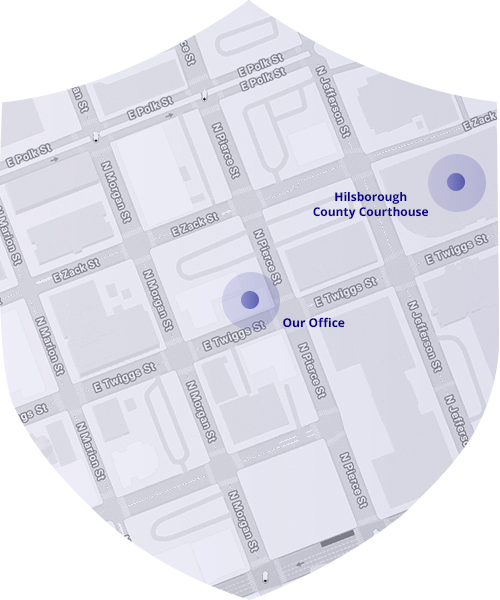
Call now if there were cameras where your case happened, because most footage is recorded over long before the first court date. The Brancato Law Firm, P.A., founded by Tampa Criminal Defense Attorney Rocky Brancato, can send preservation letters, walk the scene, and request an evidence view; call (813) 727-7159 at any hour. Our office is two blocks from the courthouse. Our firm has Spanish-speaking staff, and attorney Jean-Luc Adrien speaks Spanish, Haitian Creole, and French. For more about our defense strategies, visit our Forensic Science page.
The Brancato Law Firm, P.A.
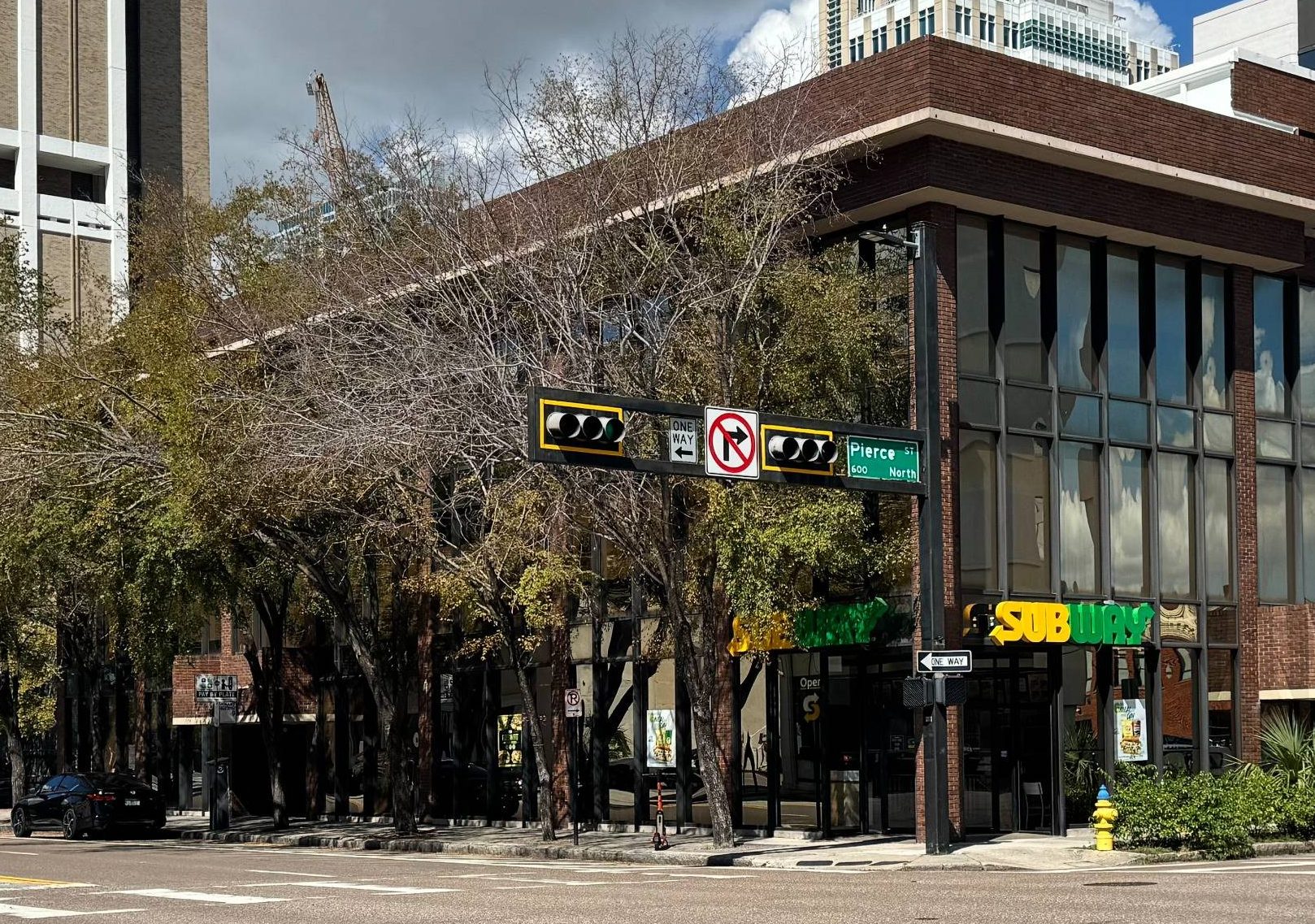
620 E. Twiggs Street, Suite 205, Tampa, FL 33602
(813) 727-7159
Serving Hillsborough, Pinellas, and Pasco Counties
The Brancato Law Firm, P.A. is a Tampa-based criminal defense practice. We are not affiliated with any other Brancato-named law firms.
Visit Us
Tampa, FL 33602
Contact Us Now
Free Legal Consultation (813) 727-7159