- Free Consultation 24/7: (813) 727-7159 Tap Here To Call Us


From First DUI to Death Penalty



Can Criminal Charges Be Dropped or Dismissed in Florida? (2026)



Updated October 22, 2026
Yes. In Florida, the State Attorney can drop charges by never filing them (a “no information”) or by dropping them after filing (a nolle prosequi), and a judge can dismiss charges on a defense motion. The most common judge-ordered dismissal is the sworn motion to dismiss on undisputed facts, now Florida Rule of Criminal Procedure 3.190(d)(2), which since July 13, 2026 must be filed by the deadline the judge sets. Diversion programs end in dismissal too. In fiscal year 2024-25, 12.0% of Florida felony cases were dismissed before trial, and about 35% of misdemeanor cases were never filed or were dismissed.
If you were just arrested, or charged and given a court date, the first question is usually whether this can go away. Often it can, and the work that makes it happen starts long before trial. I’m Rocky Brancato, founder of The Brancato Law Firm, P.A., a Tampa criminal defense firm, and former Chief Operations Officer of the Hillsborough County Public Defender’s Office, where I oversaw a staff of over 100 attorneys. Our attorneys work every case for an early dismissal when the facts allow it, in Hillsborough, Pinellas, and Pasco Counties.
This guide explains who can drop a case, the difference between dropped and dismissed, how the 2026 rule change affects motions to dismiss, the Hillsborough diversion programs, and how often Florida cases actually end this way.
Who decides whether charges are dropped in Florida?
The State Attorney does. In State v. Bloom, 497 So. 2d 2 (Fla. 1986), the Florida Supreme Court held that “the decision to charge and prosecute is an executive responsibility, and the state attorney has complete discretion in deciding whether and how to prosecute.” A judge cannot order a prosecutor to file or to drop a charge.
That means the alleged victim cannot drop charges either. The person who called the police can ask the prosecutor not to proceed, and that request often matters, but the decision belongs to the State. Our guide for alleged victims, Can a Victim Drop Domestic Violence Charges in Florida?, explains how that works in the most common setting. Our attorneys at The Brancato Law Firm aim our early work at the prosecutor who makes the filing decision.
What is the difference between dropped, nolle prossed, and dismissed?
The words describe who ended the case and when.
| Term | Who decides | When | Can the State refile? |
|---|---|---|---|
| No information (no file) | Prosecutor | Before formal charges are filed | Yes, within the statute of limitations |
| Nolle prosequi (nolle pros) | Prosecutor | After charges are filed | Usually yes, with limits under the speedy trial rule |
| Dismissal on a defense motion | Judge | After charges are filed | Depends on the ground; a sworn motion to dismiss is not a bar to a later prosecution |
| Dismissal after diversion | Prosecutor or court, after the program is completed | After the program ends | The dismissal is without prejudice under § 948.08, but it follows the client’s completion of the program |
| Acquittal | Jury or judge at trial | At trial | No |
Florida’s court statistics use the term “No File” for a case where “All charges in a criminal matter are dropped because the prosecutor did not obtain an indictment, file an information, or pursue the initial complaint.” Our attorneys explain to every client which of these outcomes is realistic, because they affect sealing and expungement differently.
Can charges be dropped before they are filed?
Yes, and that is often the best time. After an arrest, the State Attorney reviews the case before filing a formal charge. Under Florida Rule of Criminal Procedure 3.134, the State must file within 30 days for a person in custody, or the person is released on the 33rd day (the 40th with good cause). For a person out on release, the deadline is 60 days, with release from bond conditions available after 63 days. Under Rule 3.133, a person charged with a felony who has not been formally charged within 21 days can request an adversary preliminary hearing.
During that window, our attorneys present the prosecutor with what the arrest report left out: video, witness statements, texts, injuries to our client, and sworn affidavits. That work is called pre-file advocacy. Recent results include an aggravated assault case where we were hired the day of the arrest and the alleged victim’s affidavit led the State to decline charges within 24 days (February 2026), and a husband-and-wife felony drug possession case where charges were never filed after we addressed constructive possession in shared luggage (March 2026). Past results do not guarantee future outcomes.
How does a motion to dismiss work in Florida?
A motion to dismiss asks a judge to end the case before trial. Under Florida Rule of Criminal Procedure 3.190, all defenses other than not guilty must be raised by a motion to dismiss, “including immunity under section 776.032.” The best-known version is the sworn motion based on undisputed facts.
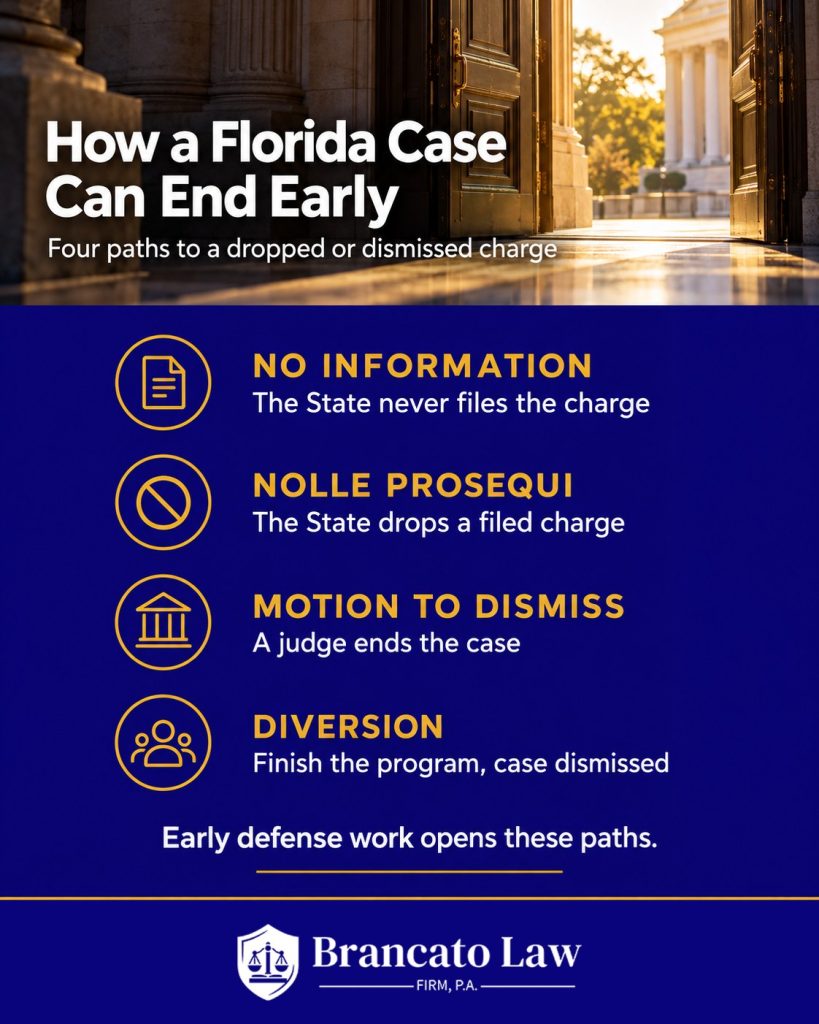
That motion moved and changed in 2025 and 2026. In In re Amendments to Florida Rule of Criminal Procedure 3.190, 421 So. 3d 424 (Fla. 2025), effective July 13, 2026, the Florida Supreme Court moved the old Rule 3.190(c)(4) motion to subdivision (d)(2) and added a deadline: “The court must dismiss any motion not filed before the deadline set by the court, unless the defendant demonstrates good cause, for the delay, or the motion is based on fundamental grounds.” On October 1, 2026, the Court restored the requirement that the motion be sworn.
Under Rule 3.190(d)(2), the defendant may move to dismiss “on the basis that there are no material disputed facts and the undisputed facts do not establish a prima facie case of guilt.” The State can answer with a traverse, a sworn denial of the facts, or a demurrer, which accepts the facts and argues they still prove a crime. In State v. Kalogeropolous, 758 So. 2d 110 (Fla. 2000), the Florida Supreme Court held that a general traverse is not enough; the State must “specifically dispute a material fact alleged by the defendant or add additional material facts that meet the minimal requirement of a prima facie case.” The Court added that “If a material fact is disputed, denial of the motion to dismiss is mandatory.”
Two recent cases show the limits. In State v. Yanes-Blanco, 401 So. 3d 592 (Fla. 5th DCA 2025), the Fifth District reversed a dismissal, holding that “the trial court does not determine factual issues or weigh evidence” on this motion. In State v. Adams, No. 3D23-2305 (Fla. 3d DCA June 25, 2025), the Third District reversed a dismissal granted on an unsworn oral motion. The lesson is that the motion must be written, sworn, specific, and filed on time.
| State’s response | What it means | Effect on the motion |
|---|---|---|
| Traverse | A sworn denial of a material fact, or added material facts | The court must deny the motion if the traverse shows a material disputed fact |
| Demurrer | The State accepts the facts but argues they prove a crime | The judge decides the legal question |
| No response | The State files nothing | The court presumes the sworn facts are true |
What other grounds can get a case dismissed?
Several. A judge can dismiss based on Stand Your Ground immunity under section 776.032, Florida Statutes, which puts the burden on the State to overcome a prima facie claim by clear and convincing evidence; our post on how a Stand Your Ground immunity hearing works explains the process. A case can also end for a speedy trial violation, covered in our guide to the right to a speedy trial in Florida, for an expired statute of limitations, for double jeopardy, or for a defective charging document.
A successful motion to suppress does not dismiss a case by itself, but when it removes the key evidence, the State often drops the charge because it can no longer prove it. Our attorneys at The Brancato Law Firm often file suppression and dismissal motions together.
Can diversion get charges dismissed in Hillsborough County?
Yes. Florida’s pretrial intervention statute, section 948.08, Florida Statutes, makes “Any first offender, or any person previously convicted of not more than one nonviolent misdemeanor, who is charged with any misdemeanor or felony of the third degree” eligible, with the consent of the victim, the State Attorney, and the judge. The defendant waives speedy trial, the charges are continued for 90 days with up to 90 more, and at the end the program may recommend “dismissal of charges without prejudice.” The State Attorney makes the final decision.
The Hillsborough State Attorney’s Office lists its programs on its programs page:
| Program | Who it is for, as the State Attorney describes it |
|---|---|
| Adult Pre-Arrest Diversion (APAD) | Eligible misdemeanors with minimal or no record; no charges are filed on completion |
| Misdemeanor Intervention Program (MIP) | First-time misdemeanor offenders, with State Attorney consent |
| Pretrial Intervention | Certain first-time felony offenders, supervised by the Department of Corrections |
| Reducing Impaired Driving Recidivism (RIDR) | Eligible DUI cases |
| Drug Education and Treatment Reducing Recidivism (DETRR) | Low-risk, nonviolent drug possession |
| Domestic Violence Intervention Program (DVIP) | Misdemeanor domestic violence, with State Attorney consent |
| Traffic Diversion | Specific criminal traffic charges related to licensing and registration |
In October 2026, a client of ours completed diversion on multiple drug possession counts, the charges were dismissed, and the client is now eligible for expungement. Past results do not guarantee future outcomes.
How often are criminal charges dropped or dismissed in Florida?
More often than most people expect. The Florida courts’ FY 2024-25 Statistical Reference Guide shows that 18,616 of 155,206 felony dispositions statewide were dismissals before trial, or 12.0%. Another 76.4% ended in pleas, and 1.3% went to a jury.
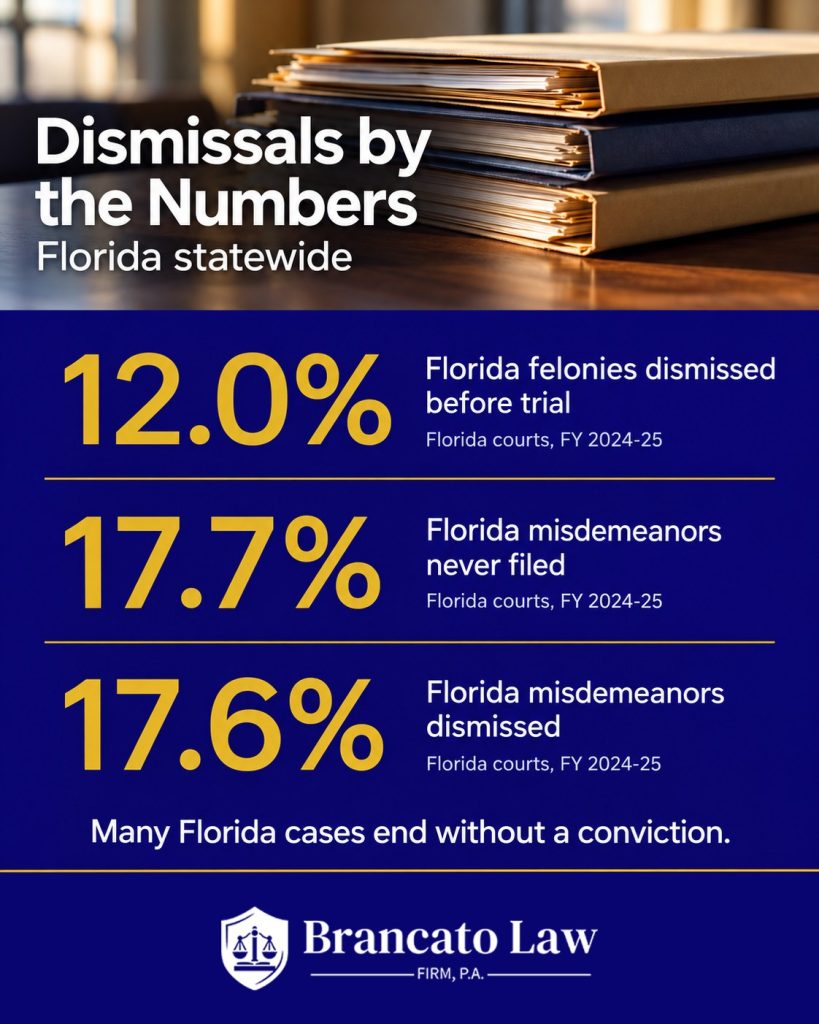
Misdemeanors are dropped even more often. The county criminal chapter of the same guide counts 41,433 “No File” dispositions (17.7%) and 41,060 dismissals (17.6%) among 233,667 misdemeanor dispositions statewide in FY 2024-25, together about 35%. The figures exclude criminal traffic and DUI cases.
Hillsborough County has been studied directly. Researchers from Florida International University and Loyola University Chicago reviewed Hillsborough State Attorney’s Office cases from 2017 and 2018 in Race, Ethnicity and Prosecution in Hillsborough County, Florida (2019) and found that about 23% of cases ended in prosecutorial dismissal: 28% of misdemeanors and 8% of felonies. National research suggests dropping low-level cases can help public safety too. A study in the Quarterly Journal of Economics by Agan, Doleac, and Harvey, Misdemeanor Prosecution (2023), found that not prosecuting a marginal nonviolent misdemeanor defendant cut the likelihood of a new criminal complaint within two years by 53%.
What actually gets charges dropped?
Evidence that changes the prosecutor’s view of the case. In our experience, that usually means video, a witness the police never interviewed, proof that the client was the one attacked, a suppression issue, or a sworn statement from the alleged victim. Recent results from our firm:
| Charge | Result |
|---|---|
| Battery (January 2026) | Dismissed after frame-by-frame video analysis showed our client was the one attacked |
| Aggravated assault with a deadly weapon (May 2026) | All charges dismissed |
| Fentanyl trafficking (March 2025) | Pretrial detention defeated, then a letter of release within three weeks based on constructive possession and search issues |
Past results do not guarantee future outcomes. More results are on our case results page.
What should you do to give your case the best chance of dismissal?
Act during the filing window. Do not talk to police or the alleged victim about the case, save texts, photos, and video, and write down the names of witnesses while you remember them. Tell your lawyer everything, because a sworn motion to dismiss commits the defense to a set of facts, and those facts must be accurate. Our Hillsborough County criminal defense attorney team starts with the filing decision, then moves to motions if the case is filed.
Frequently asked questions about dropped and dismissed charges in Florida
Can the alleged victim drop charges in Florida?
No. Only the State Attorney can drop charges, although the alleged victim’s wishes and a truthful sworn statement often influence the decision. The Brancato Law Firm presents that information to the assigned prosecutor during the filing window.
How long does the State have to file charges in Florida?
For a person held in jail, 30 days, with release required on the 33rd day or the 40th day for good cause under Rule 3.134. For a person out on release, 60 days before bond conditions can be lifted, and our attorneys at The Brancato Law Firm use that time for representation before charges are filed.
What is a 3.190(c)(4) motion to dismiss in Florida?
It is the sworn motion to dismiss based on undisputed facts, which became Rule 3.190(d)(2) on July 13, 2026. It must now be filed by the deadline the judge sets, and The Brancato Law Firm calendars that deadline at arraignment.
Does a dismissed charge stay on my record in Florida?
The arrest record remains until it is sealed or expunged, even after a dismissal. A dismissal often makes the record eligible to be cleared, and our attorneys at The Brancato Law Firm explain the next step when a case ends.
Can a dropped charge be refiled in Florida?
Often, yes. A no information or a nolle prosequi usually allows the State to refile within the statute of limitations, while an acquittal ends the matter for good. The Brancato Law Firm explains which outcome is realistic before a client accepts any resolution, and our Hillsborough County criminal defense page covers the local programs.
Does completing diversion get my case dismissed?
Yes, when the program is completed. Under section 948.08, the program can recommend dismissal without prejudice, and the State Attorney makes the final decision. Our attorneys at The Brancato Law Firm negotiate entry into these programs and track compliance so the dismissal happens on schedule.
For how this fits into the rest of a case, see our overview of how a Florida criminal case moves from investigation to appeal.
Call our Tampa criminal defense attorneys while the case is still open
The best time to get a case dropped is before it is filed, and the next best is before the motion deadline the judge sets. The Brancato Law Firm, P.A., founded by Tampa Criminal Defense Attorney Rocky Brancato, will contact the prosecutor, gather the evidence, and file the right motion on time. Call (813) 727-7159 for a free, confidential consultation. You can call us at any hour. Our firm has Spanish-speaking staff, and attorney Jean-Luc Adrien speaks Spanish, Haitian Creole, and French. Read about our Spanish and Haitian Creole criminal defense services.
For more about our defense strategies, visit our Hillsborough County Criminal Defense page.
The Brancato Law Firm, P.A.
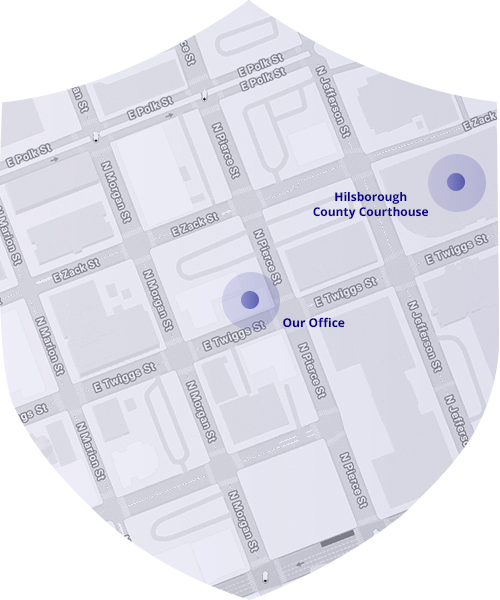
620 E. Twiggs Street, Suite 205, Tampa, FL 33602
(813) 727-7159
Serving Hillsborough, Pinellas, and Pasco Counties
The Brancato Law Firm, P.A. is a Tampa-based criminal defense practice. We are not affiliated with any other Brancato-named law firms.
Visit Us
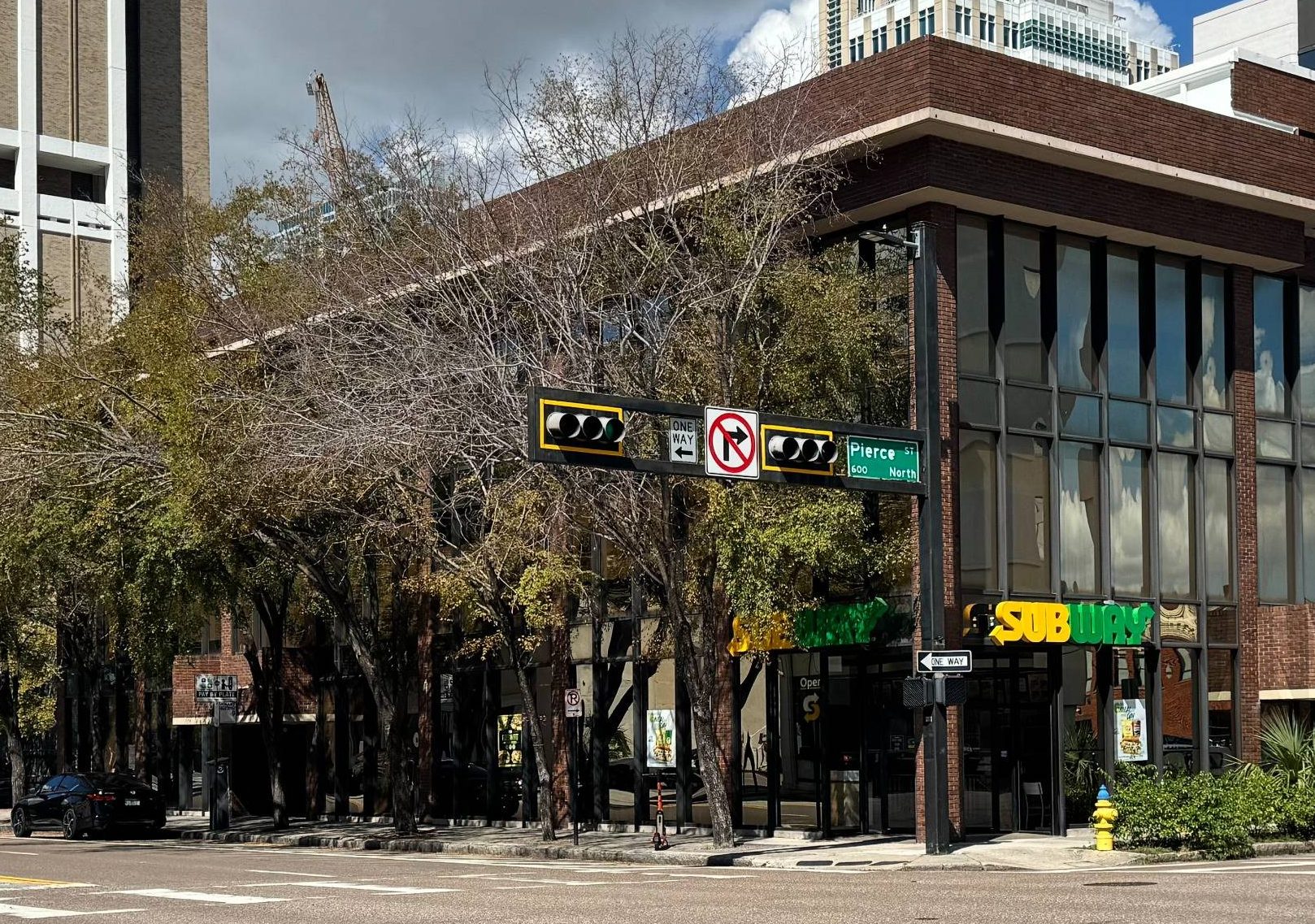
Tampa, FL 33602
Contact Us Now
Free Legal Consultation (813) 727-7159