- Free Consultation 24/7: (813) 727-7159 Tap Here To Call Us


From First DUI to Death Penalty



How Does the Corpus Delicti Defense Work in Florida? (2026)


Updated November 5, 2026
The corpus delicti defense in Florida stops the State from using a confession until it first shows, with independent evidence, that a crime actually happened. Under State v. Allen, prosecutors must bring “substantial evidence” tending to show each element of the offense before the jury hears what the accused said. In most sex abuse cases, section 92.565 lets the State skip that step, but only after a judge finds the confession trustworthy at a hearing outside the jury’s presence.
Many confession cases are decided before trial, at a hearing where the defense asks one question: where is the crime? As founder of The Brancato Law Firm, P.A., a Tampa criminal defense firm, I bring a former police academy instructor’s view of how interrogations are run, and I spent years in the Major Crimes Unit defending homicide, sex crime, and child abuse cases built on statements. I am also the former Chief Operations Officer of the Hillsborough County Public Defender’s Office, where I oversaw a staff of over 100 attorneys. Our attorneys use the corpus delicti rule to test whether the State has a case without the client’s own words.
What is the corpus delicti rule in Florida?
The corpus delicti rule requires the State to prove that a crime occurred, using evidence other than the defendant’s statements, before a confession can be admitted. “Corpus delicti” is Latin for “the body of the crime.” Florida courts have applied the rule for well over a century.
The leading case is State v. Allen, 335 So. 2d 823 (Fla. 1976). Tommy Allen confessed that he was driving the car when his passenger, Curtis Black, was thrown out and killed. The Florida Supreme Court explained the purpose of the rule in one line: “no person be convicted out of derangement, mistake or official fabrication.” The State’s burden is to bring forth “substantial evidence” tending to show the commission of the crime. That proof can be circumstantial, and it does not need to be overwhelming, but it “must at least show the existence of each element of the crime.”
In Allen’s case, the Court found enough independent proof. Witnesses saw Allen get into the driver’s side minutes before the crash, and the position of Black’s body suggested he was the passenger. The confession came in.
Does the rule apply to admissions as well as full confessions?
Yes. A partial admission is treated the same as a full confession. In Burks v. State, 613 So. 2d 441 (Fla. 1993), a truck driver charged with DUI manslaughter under section 316.193, Florida Statutes, told police he was the driver. The Florida Supreme Court held that the State cannot use an admission to fill in a missing element: “The corpus delicti cannot be proven solely by a confession or admission.” Burks’s conviction stood only because other evidence, including his supervisor asking whether Burks could drive the truck away, independently put him behind the wheel.
What must the State prove before your confession comes in?
The State must show two things with independent evidence: that a harm of the type charged occurred, and that it was caused by someone’s criminal conduct. It does not have to prove who did it first. Allen held that the defendant’s identity is not a required predicate for admitting a confession.
| Question | Rule under Florida law | Source |
|---|---|---|
| Must the State prove a crime occurred before the confession comes in? | Yes, with substantial independent evidence of each element | State v. Allen (Fla. 1976) |
| Can circumstantial evidence satisfy the rule? | Yes | State v. Allen (Fla. 1976) |
| Must the independent proof be overwhelming or beyond a reasonable doubt? | No; that standard applies to the verdict, not to admission | State v. Allen (Fla. 1976) |
| Must the State first prove the defendant’s identity? | No | State v. Allen; Burks v. State (Fla. 1993) |
| Does the rule cover partial admissions? | Yes | Burks v. State (Fla. 1993) |
| Is there an exception for sex abuse cases? | Yes, a trustworthiness hearing under section 92.565 | Section 92.565, Fla. Stat. |
Why do false confessions make this rule matter?
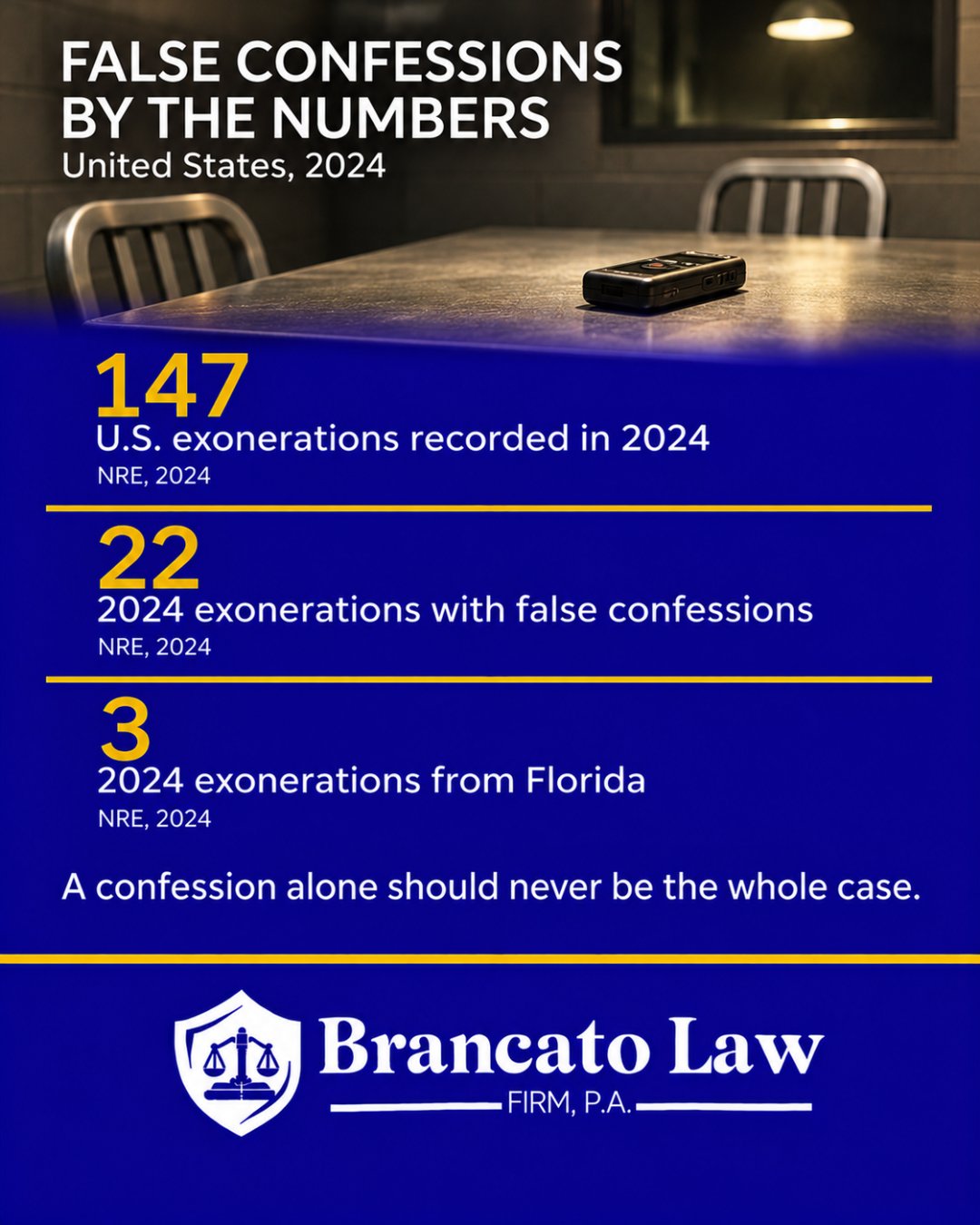
People confess to crimes they did not commit, and the numbers prove it. In 2024, the National Registry of Exonerations recorded 147 exonerations in the United States, and 22 of them (15%) involved false confessions, according to its 2024 Annual Report. Three of the 147 were Florida cases.
Legal scholarship explains how this happens. In The Problem of False Confessions in the Post-DNA World, 82 N.C. L. Rev. 891 (2004), Steven Drizin and Richard Leo studied proven false confessions and the interrogation pressures behind them. Their work is a large part of why courts and defense lawyers treat an uncorroborated confession with caution. The corpus delicti rule is the evidentiary safeguard that keeps a statement like that from standing alone. Our firm also challenges how a statement was obtained, which is a separate fight covered in our guide to fighting a false confession and in our discussion of coerced confessions and forensic psychology.
How is a corpus delicti challenge different from a motion to suppress?
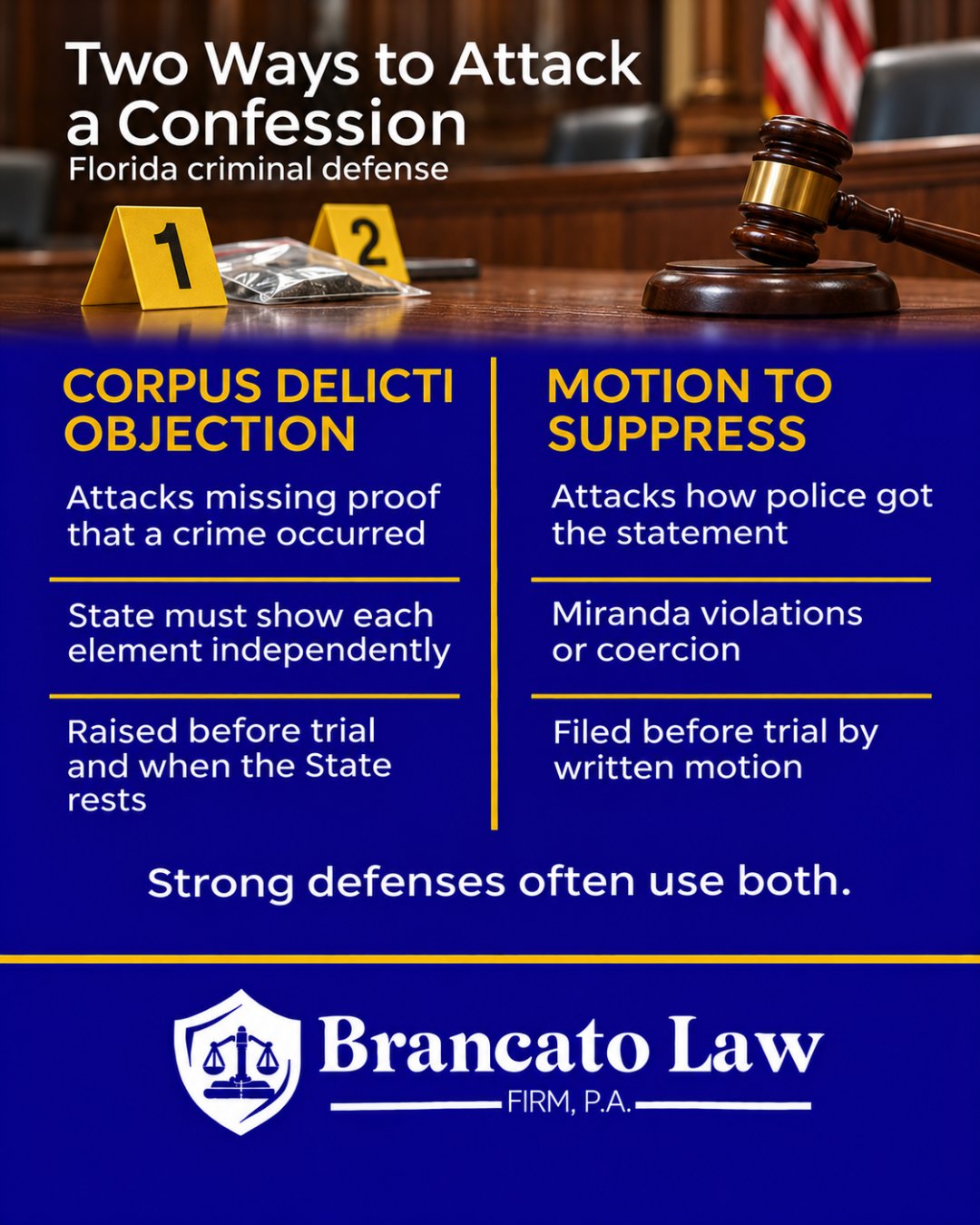
A motion to suppress attacks how police got the statement; a corpus delicti objection attacks whether the State has proof of a crime apart from the statement. The two work together. A confession taken in violation of Miranda, or one that was coerced, can be suppressed even if the crime is well documented. A voluntary, properly warned confession can still be kept out if the State cannot show the crime occurred.
The issue also survives into trial. If the judge admits the confession at a pretrial hearing, our attorneys can renew the objection when the State rests and move for a judgment of acquittal if the independent evidence never filled the gap. Losing one round does not end the issue.
| Feature | Corpus delicti objection | Motion to suppress |
|---|---|---|
| What it attacks | Lack of independent proof that a crime occurred | Illegal or involuntary questioning |
| Typical grounds | No body, no injury, no missing property, no proof of an element | Miranda violations, coercion, unlawful arrest |
| Who carries the burden | The State must show substantial independent evidence | Depends on the claim; the State must prove voluntariness |
| When it is raised | Before trial, when the State offers the statement, and at the close of the State’s case | Before trial, by written motion |
| Result if granted | The confession is not admitted | The confession is excluded |
What is Florida’s confession-without-corpus exception in sex crimes?
Section 92.565 lets the State use a confession in certain sex abuse cases without proving the corpus delicti, but only after a judge finds the confession trustworthy. The factors the statute lists point to cases where an alleged victim, such as a very young child or a person who was asleep or incapacitated, cannot describe each element of the offense.
Under section 92.565, Florida Statutes, the exception covers charges including sexual battery under section 794.011, lewd or lascivious offenses under section 800.04, incest, child abuse or neglect involving sexual abuse, offenses under section 827.071, certain human trafficking and computer-solicitation offenses, “any other crime involving sexual abuse of another,” and attempts, solicitations, and conspiracies to commit them. Our Tampa sex crimes lawyer page explains how these charges are defended from investigation through trial.
The statute sets out a specific sequence:
- The hearing happens outside the presence of the jury.
- The judge must first find that the State is unable to show the existence of each element of the crime. Relevant factors include whether the alleged victim was physically helpless, mentally incapacitated, physically incapacitated due to age or infirmity, or under 12 years old.
- The State must then prove by a preponderance of the evidence that there is sufficient corroborating evidence that tends to establish the trustworthiness of the statement.
- Hearsay is admissible at the hearing, and the court may consider all relevant corroborating evidence, including the defendant’s own statements.
- The judge must make specific findings of fact on the record.
The statute also applies only to a “memorialized” confession or admission. Whether a statement was preserved, and how, is often the first question our attorneys ask.
Has section 92.565 survived court challenges?
Yes, so far. In State v. Dionne, 814 So. 2d 1087 (Fla. 5th DCA 2002), a man charged with sexual battery on a sleeping victim moved to suppress his confession because the State could not independently prove the crime. The trial court applied the old rule and suppressed it. The Fifth District reversed, holding that section 92.565 is a procedural rule of evidence that “merely changes the predicate” for admitting a confession. It does not lower the State’s burden to prove guilt beyond a reasonable doubt, so it could be applied to offenses committed before it took effect.
The practical lesson from Dionne: in a covered case, the fight moves from “is there a body of the crime?” to “is this confession trustworthy?” That hearing is often where the case is won or lost.
How do our attorneys challenge trustworthiness under section 92.565?
We attack the corroboration, the recording, and the conditions of the interrogation. The statute asks whether independent evidence tends to establish that the statement is true, so we look for facts in the confession that police supplied, facts that do not match the physical evidence, and details the accused could have learned from the accusation itself.
- Contamination: Did the detective reveal key facts before the client repeated them?
- Fit with the evidence: Do the medical findings, timeline, and scene match what the statement says?
- Recording gaps: Is the full interview recorded, or only the final admission?
- Vulnerability: Age, intellectual disability, intoxication, fatigue, and mental illness all bear on reliability.
- Child hearsay overlap: When the accusation comes through a child’s out-of-court statements, we also contest those statements, as explained in our child hearsay guide.
What happens if a confession is the State’s only evidence?
If the State has nothing but the confession and no statutory exception applies, the confession should not be admitted, and without it there is no case. In practice, prosecutors usually have something: a report, an injury, a missing item, a witness. The question is whether that independent evidence shows each element. A charge with a missing element, such as no proof that property was taken without consent, is where the rule does the most work.
Why should you call a lawyer before you are charged?
The strongest corpus delicti defense is a statement that was never made. If detectives want to “clear things up,” you may already be a suspect; our post on the signs you are being investigated covers the warning signs. Our firm offers representation before charges are filed, which can include speaking with detectives for you and presenting information to prosecutors before a filing decision. In Hillsborough County, felony charging decisions are made by the State Attorney’s Office for the 13th Judicial Circuit, and early contact with that office can shape what gets filed.
Frequently asked questions
Can I be convicted in Florida if my confession is the only evidence?
Generally no. Florida requires independent evidence that a crime occurred before a confession can be admitted, unless a statutory exception like section 92.565 applies and a judge finds the statement trustworthy. The Brancato Law Firm reviews the State’s evidence element by element to find what is missing before any trial date is set.
Does the State have to prove I am the person who committed the crime before using my confession?
No. Under State v. Allen, the State must independently show that a crime occurred, but it does not have to independently prove the defendant’s identity before the confession comes in. Our attorneys at The Brancato Law Firm still hold the State to proof beyond a reasonable doubt on identity at trial.
What is a section 92.565 hearing?
It is a hearing outside the jury’s presence where a judge decides whether the State can use a memorialized confession in a covered sex abuse case without proving the corpus delicti. The Brancato Law Firm prepares for these hearings by comparing every detail of the statement against the medical, digital, and witness evidence, and our sex crimes defense attorneys treat that hearing as a trial before the trial.
Does corpus delicti apply in DUI manslaughter cases?
Yes. Burks v. State was a DUI manslaughter case, and the Florida Supreme Court held that the State could not use the defendant’s admission that he was driving to supply a missing element. At The Brancato Law Firm, we examine crash scene evidence, witness timelines, and vehicle data in fatal crash cases to test whether driving can be shown without the statement.
Is corpus delicti the same as a false confession defense?
No. Corpus delicti asks whether there is independent proof of a crime; a false confession defense asks whether the statement is reliable or voluntary. The Brancato Law Firm often raises both, and our team works with forensic psychologists when interrogation tactics are at issue, as described in our guide to fighting a false confession.
Should I talk to detectives to explain my side?
Not without a lawyer. A statement made to “explain” can become the admission that fills a gap in the State’s evidence. The Brancato Law Firm can speak with detectives for you through our pre-file advocacy work.
For how this fits into the rest of a case, see our stage-by-stage guide to the Florida criminal case process.
Talk to our attorneys about your statement
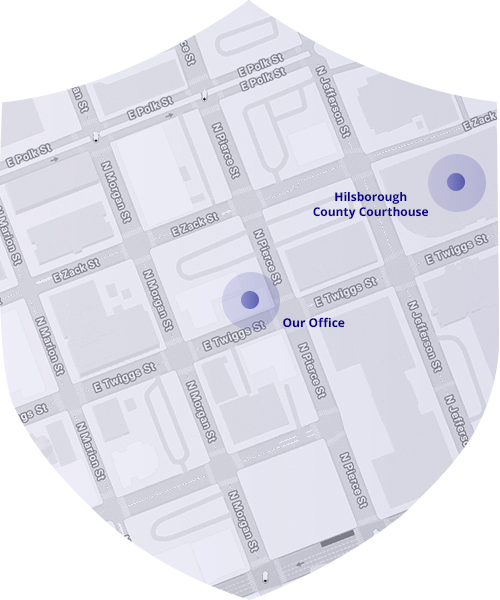
If detectives have your statement, the next step is finding out what the State can prove without it. Call The Brancato Law Firm, P.A., founded by Tampa Criminal Defense Attorney Rocky Brancato, at (813) 727-7159 before your first court date; call us at any hour. Our office is two blocks from the courthouse. Our firm has Spanish-speaking staff, and attorney Jean-Luc Adrien speaks Spanish, Haitian Creole, and French. Read our guide for Spanish-speaking criminal defense clients in Tampa. For more about our defense strategies, visit our Sex Crimes page.
The Brancato Law Firm, P.A.
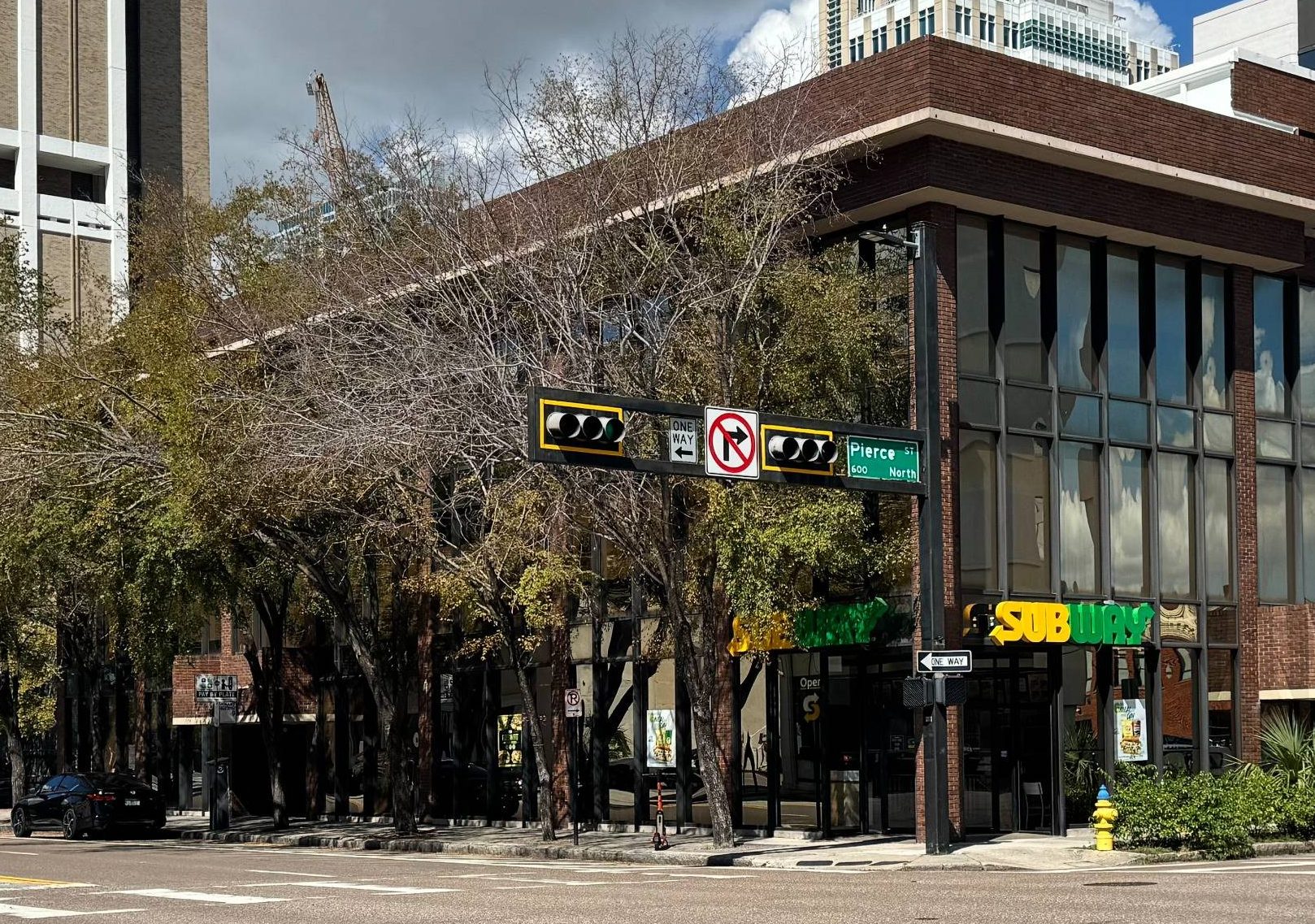
620 E. Twiggs Street, Suite 205, Tampa, FL 33602
(813) 727-7159
Serving Hillsborough, Pinellas, and Pasco Counties
The Brancato Law Firm, P.A. is a Tampa-based criminal defense practice. We are not affiliated with any other Brancato-named law firms.
Visit Us
Tampa, FL 33602
Contact Us Now
Free Legal Consultation (813) 727-7159