Every Florida DUI penalty tier as it reads in 2026, what Trenton’s Law changed, felony DUI and DUI manslaughter, Hillsborough County data, and how our attorneys get DUIs reduced.
Continue reading ›




Every Florida DUI penalty tier as it reads in 2026, what Trenton’s Law changed, felony DUI and DUI manslaughter, Hillsborough County data, and how our attorneys get DUIs reduced.
Continue reading ›
How retrograde extrapolation estimates BAC at the time of driving, what Florida courts say about it, and how a toxicologist and a reconstructionist won a DUI manslaughter acquittal.
Continue reading ›
Does the Florida accident report privilege require you to talk to police after a crash? What you must say, what you can refuse, and if your words come back.
Continue reading ›
Updated November 8, 2026 Key Takeaway: Only by clearing real legal hurdles. Your hospital records are protected by Florida’s constitutional right of privacy, and prosecutors cannot subpoena them without a court’s approval, proper notice to you, and a demonstrated connection — a “nexus” — between the records and the investigation. Florida’s appellate courts have quashed…
Continue reading ›
Completely rewritten and updated September 1, 2026. Originally published February 22, 2026. Key Takeaway: DUI manslaughter under section 316.193(3)(c)3., Florida Statutes, is driving under the influence and, by that operation, causing or contributing to the death of another person or an unborn child. It is a second-degree felony with a 4-year mandatory minimum prison term…
Continue reading ›
Updated November 6, 2026 DUI manslaughter cases in Florida are defended on two things the State has to prove: that the driver was impaired, and that the driving caused or contributed to a death. Both elements carry a heavy burden of proof, and both can be attacked. The chemical evidence, the lawfulness of the stop…
Continue reading ›
Updated November 8, 2026 Florida’s homicide laws sort killings into degrees and categories that produce dramatically different outcomes. The same death can be charged as first-degree murder (death or life without parole) or as manslaughter (15 years maximum) depending on what the prosecution can prove about intent, circumstance, and the defendant’s role. The gap between…
Continue reading ›
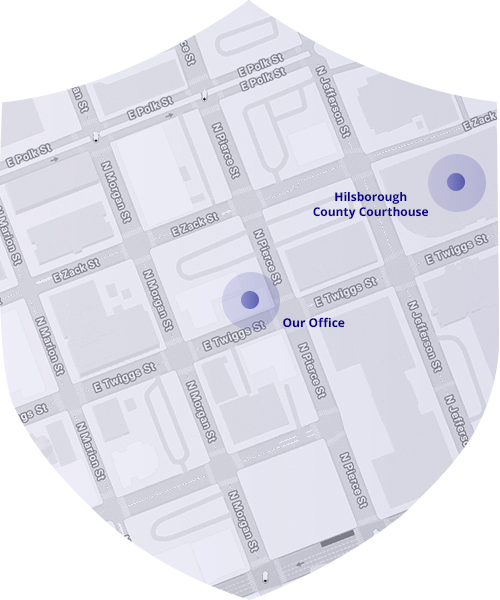
Tampa, FL 33602
Free Legal Consultation (813) 727-7159